
fbpx

Tag: MAster in Healthcare

INTRODUCTION TO RESEARCH FOR HEALTH AND SOCIAL CARE PROFESSIONS: VALUE AND DEVELOPMENT

Within the Master’s Programs in Healthcare at the University of Parma, a central role is dedicated to the introduction to research for health and social care professions, a key element for professional development and for improving the effectiveness, safety, and person-centeredness of services.

Research is an essential tool for understanding health needs, evaluating outcomes, and enhancing the quality of care. It is not only about scientific production, but also a process that enables professionals to adopt a critical, evidence-based approach, guiding decision-making in everyday practice.

Within the Master’s programs, students are guided through a progressive learning pathway, starting from the understanding of the fundamental principles of research and moving toward the development of skills in study design and analysis. Topics covered include the formulation of research questions, literature review, selection of appropriate methodologies, and interpretation of results.

Particular attention is given to the link between research and clinical practice, promoting the use of scientific evidence to support both clinical and organizational decision-making. In this way, research becomes a practical tool for innovating care models, improving processes, and responding more effectively to the complexity of health needs.

Another key aspect is the development of critical thinking, enabling professionals to analyze information, assess the quality of evidence, and actively contribute to the generation of new knowledge.

Through this approach, the Master’s Programs in Healthcare aim to train professionals who are not only skilled in practice, but also capable of questioning, innovating, and contributing to the advancement of health sciences, fostering the continuous improvement of healthcare systems.

CLASS PROFILE AND PERSONALIZED LEARNING PATHWAYS

At the beginning of each program, the Master’s Programs in Healthcare at the University of Parma promote the development of a class profile, a key tool for gaining an in-depth understanding of the student group and effectively guiding the organization of teaching activities.

By collecting information on professional backgrounds, existing competencies, and learning expectations, it is possible to outline a clear and comprehensive picture of the class. This initial phase is not only an opportunity for mutual understanding, but also a strategic step to enhance the uniqueness of each participant and foster meaningful learning.

Defining the class profile allows for the adaptation and personalization of the educational pathway, tailoring content, teaching methods, and learning activities to emerging needs. In this way, education becomes a dynamic and participatory process, capable of integrating theoretical knowledge, professional experience, and peer-to-peer exchange.

Particular attention is also given to sharing students’ expectations, which helps to build a pathway aligned with individual and professional goals, while fostering a sense of belonging and encouraging active participation.

This approach reflects a person-centered vision of education, where students play an active role in their own development. The Master’s Programs in Healthcare thus confirm their role as spaces for advanced learning, combining academic quality, flexibility, and responsiveness to the needs of healthcare professionals.

PROXIMITY AND EDUCATION: A NEW PERSPECTIVE FOR HEALTHCARE SYSTEMS

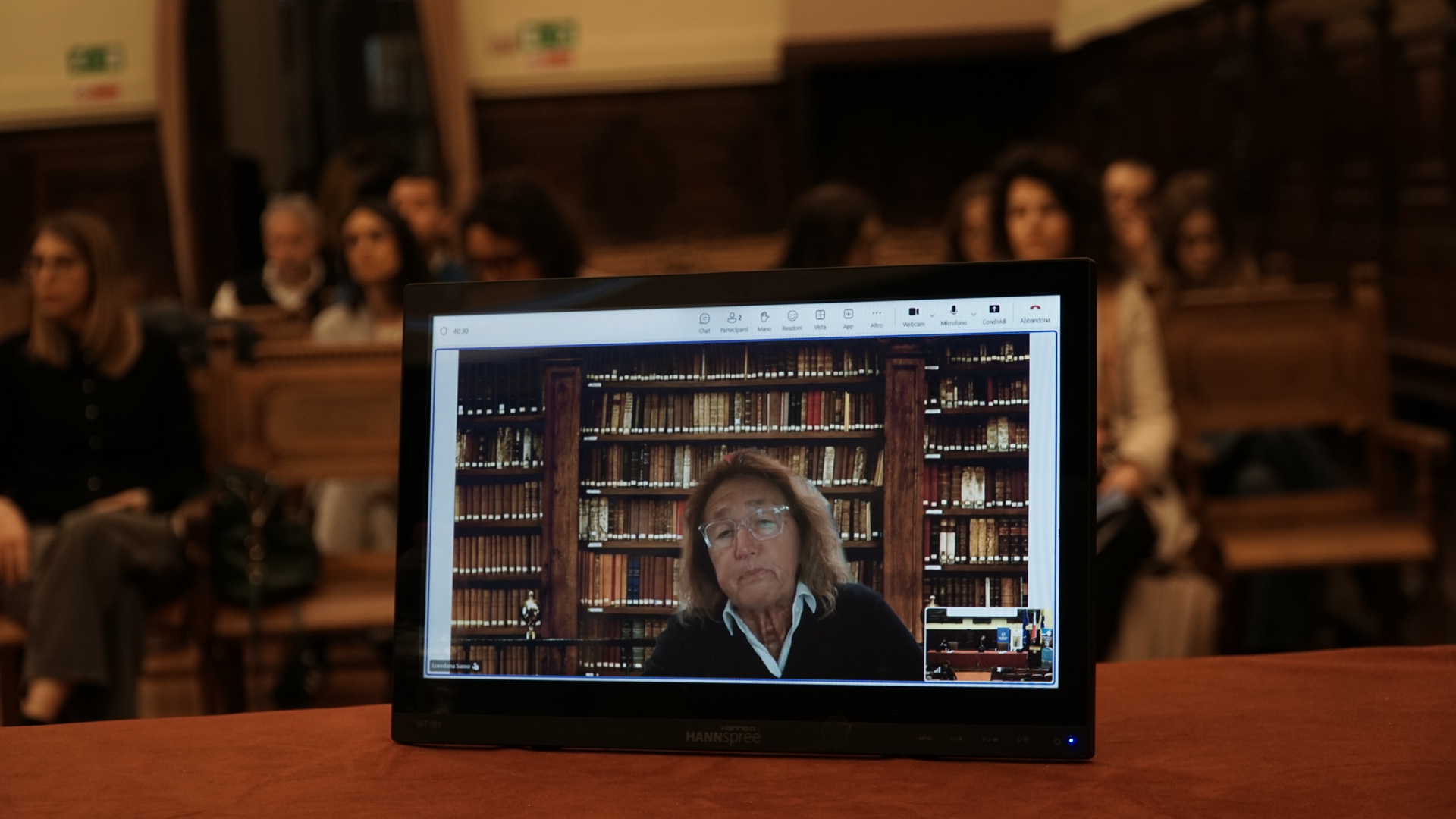
On the occasion of the inauguration ceremony of the 2025/2026 academic year of the Master’s Programs in Healthcare at the University of Parma, Prof. Loredana Sasso, Full Professor of Nursing Sciences at the University of Genoa, delivered a lectio magistralis focused on the theme of proximity, offering an in-depth reflection on the ongoing transformations in contemporary healthcare systems.

The concept of proximity is framed within a global context marked by significant demographic and social challenges, including population aging and the increasing prevalence of chronic conditions. In this scenario, healthcare is evolving from a performance-based model toward an approach centered on person-centered care, grounded in value, continuity of care, and the integration of services, increasingly developed at the community level. In her lecture, Prof. Sasso highlighted the main directions of the global health agenda, emphasizing the need to reorient healthcare systems toward primary care, ensuring continuous, integrated, and person-centered care pathways. Within this framework, nursing plays a strategic role, emerging as a key pillar in ensuring continuity of care, coordinating care pathways, and promoting patient autonomy. Among the key elements discussed, particular attention was given to accessibility, the reduction of inequalities, the integration between hospital, community, and social services, and the active involvement of patients and caregivers in care processes. In this sense, proximity is not only an organizational dimension but represents a true cultural shift, requiring a rethinking of care models and of the relationships between professionals and the people they serve.

A central role was attributed to advanced nursing education, considered a fundamental lever to address the complexity of emerging needs. The development of advanced competencies in care management, clinical complexity, and the use of data to support decision-making processes represents a concrete response to current transformations, while also requiring greater recognition of professional roles at both organizational and managerial levels. The reflection also highlighted that, although European policies increasingly recognize the value of patient and public involvement, this is still not fully integrated into decision-making processes, nursing research, and the evaluation of care outcomes. Strengthening participation models based on trust and dialogue therefore represents one of the most significant challenges for the future of healthcare systems.

The lecture concluded with a reflection on the transformative role of education:
“It is through education that we transform the present and make the future possible. With these Master’s programs, I am confident you will make a significant contribution” – Loredana Sasso. The theme of proximity thus emerges as central to the Master’s Programs in Healthcare, serving as a key to developing more equitable, integrated, and person-centered care models, capable of effectively responding to the challenges of today’s healthcare systems.

LECTIO MAGISTRALIS MATERIALS

OPENING CEREMONY OF THE ACADEMIC YEAR FOR THE MASTER IN HEALTHCARE PROGRAMMES

On March 30, the opening ceremony of the new academic year of the Master in Healthcare programmes at the University of Parma will take place, marking the official start of educational activities and the beginning of a new path of growth for students, faculty members, and professionals involved.

The event represents an important opportunity for meeting and sharing within the entire Master in Healthcare community, offering a space for reflection on the value of advanced education in the healthcare and social care context and on the challenges facing health professionals. The opening ceremony will also be an opportunity to reaffirm the University’s commitment to promoting high-quality educational pathways that integrate scientific knowledge, practical skills, and attention to the needs of individuals and communities.

During the day, the objectives of the academic year, the main development lines of the training programmes, and the opportunities offered to students in terms of learning, interdisciplinary exchange, and professional growth will be presented. The meeting will also encourage dialogue between coordinators and participants, strengthening the sense of belonging to a community focused on innovation and continuous improvement of services.

The opening ceremony on March 30 marks the beginning of a new chapter for the Master in Healthcare programmes, confirming their role as a privileged space for education, research, and skills development to address the transformations of the healthcare system with responsibility and vision.

Further information about the event programme will be communicated in the coming days.

HealthCareMaster
Send on WhatsApp