
fbpx

Tag: primary care

PROXIMITY AND EDUCATION: A NEW PERSPECTIVE FOR HEALTHCARE SYSTEMS

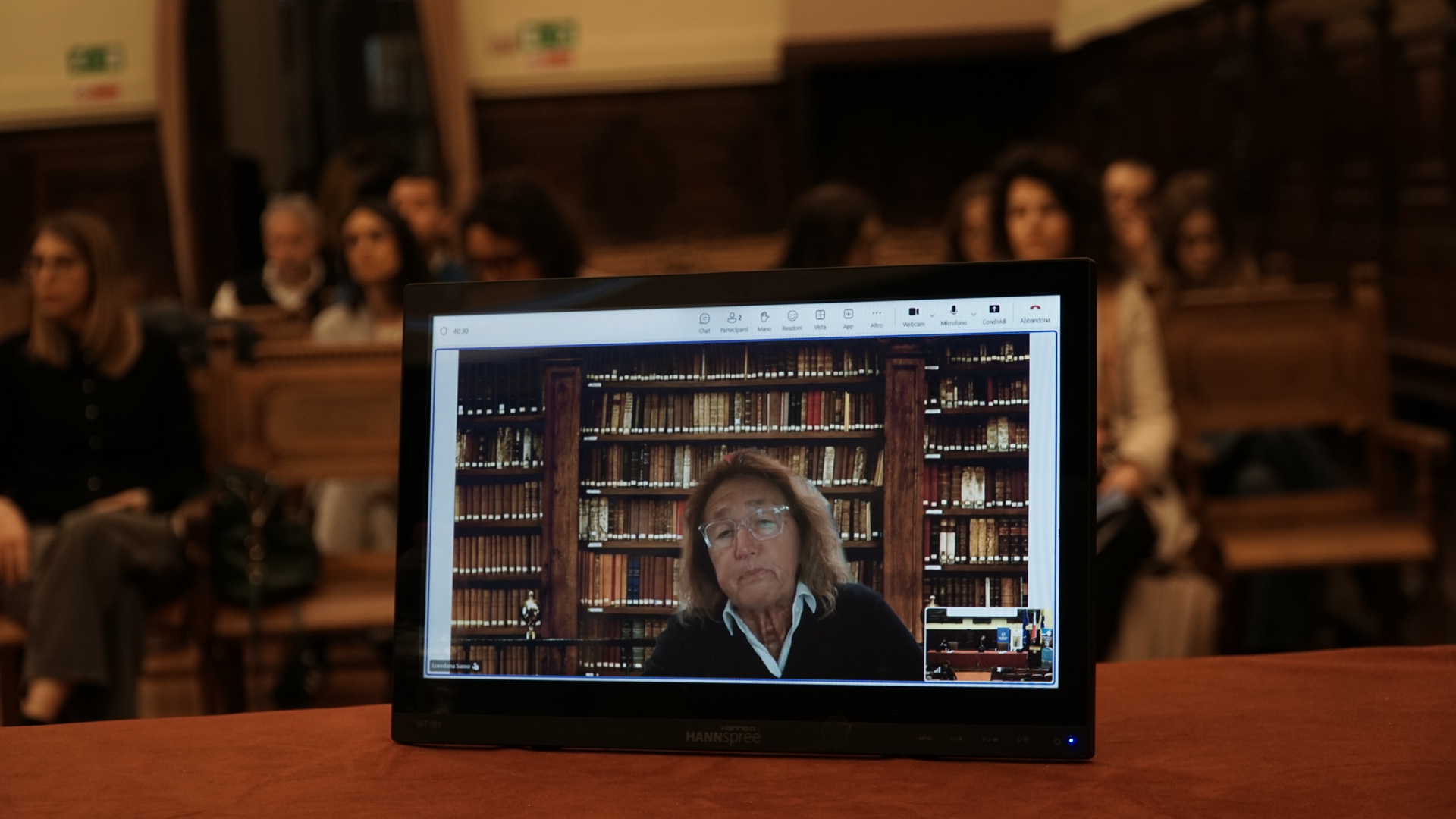
On the occasion of the inauguration ceremony of the 2025/2026 academic year of the Master’s Programs in Healthcare at the University of Parma, Prof. Loredana Sasso, Full Professor of Nursing Sciences at the University of Genoa, delivered a lectio magistralis focused on the theme of proximity, offering an in-depth reflection on the ongoing transformations in contemporary healthcare systems.

The concept of proximity is framed within a global context marked by significant demographic and social challenges, including population aging and the increasing prevalence of chronic conditions. In this scenario, healthcare is evolving from a performance-based model toward an approach centered on person-centered care, grounded in value, continuity of care, and the integration of services, increasingly developed at the community level. In her lecture, Prof. Sasso highlighted the main directions of the global health agenda, emphasizing the need to reorient healthcare systems toward primary care, ensuring continuous, integrated, and person-centered care pathways. Within this framework, nursing plays a strategic role, emerging as a key pillar in ensuring continuity of care, coordinating care pathways, and promoting patient autonomy. Among the key elements discussed, particular attention was given to accessibility, the reduction of inequalities, the integration between hospital, community, and social services, and the active involvement of patients and caregivers in care processes. In this sense, proximity is not only an organizational dimension but represents a true cultural shift, requiring a rethinking of care models and of the relationships between professionals and the people they serve.

A central role was attributed to advanced nursing education, considered a fundamental lever to address the complexity of emerging needs. The development of advanced competencies in care management, clinical complexity, and the use of data to support decision-making processes represents a concrete response to current transformations, while also requiring greater recognition of professional roles at both organizational and managerial levels. The reflection also highlighted that, although European policies increasingly recognize the value of patient and public involvement, this is still not fully integrated into decision-making processes, nursing research, and the evaluation of care outcomes. Strengthening participation models based on trust and dialogue therefore represents one of the most significant challenges for the future of healthcare systems.

The lecture concluded with a reflection on the transformative role of education:
“It is through education that we transform the present and make the future possible. With these Master’s programs, I am confident you will make a significant contribution” – Loredana Sasso. The theme of proximity thus emerges as central to the Master’s Programs in Healthcare, serving as a key to developing more equitable, integrated, and person-centered care models, capable of effectively responding to the challenges of today’s healthcare systems.
LECTIO MAGISTRALIS MATERIALS

INAUGURATION OF THE 2025/2026 ACADEMIC YEAR OF THE MASTER’S PROGRAMS IN HEALTHCARE

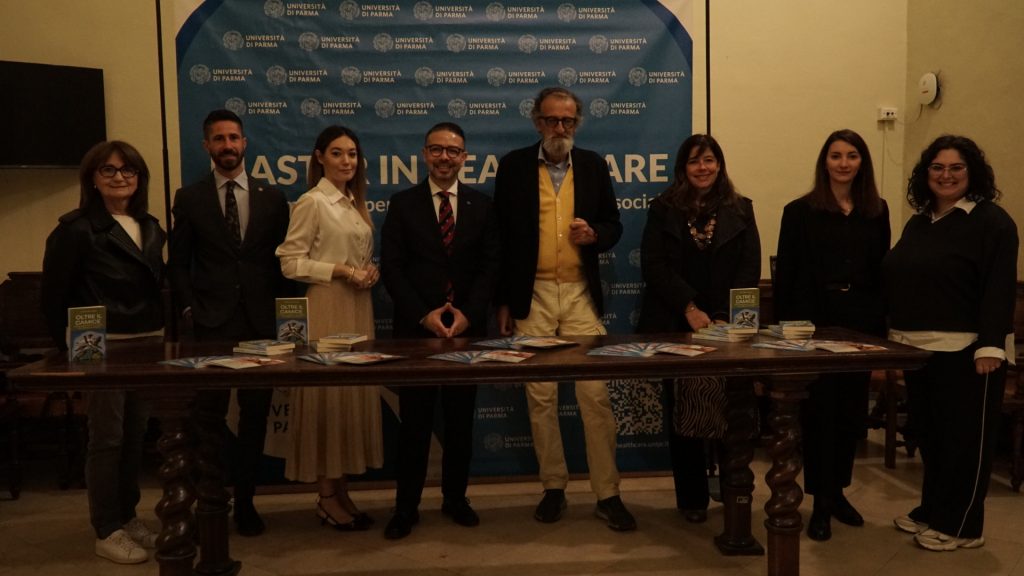
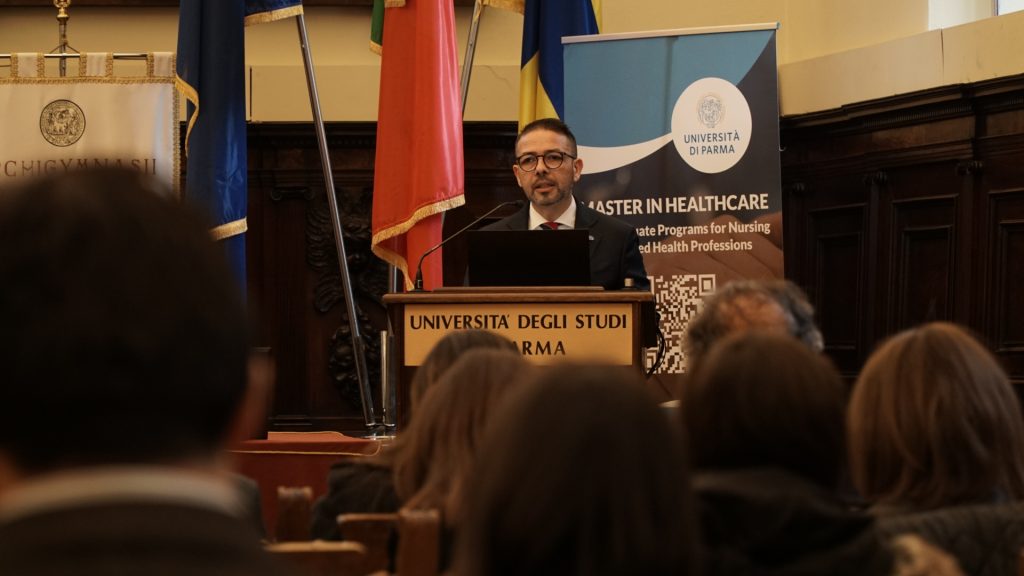
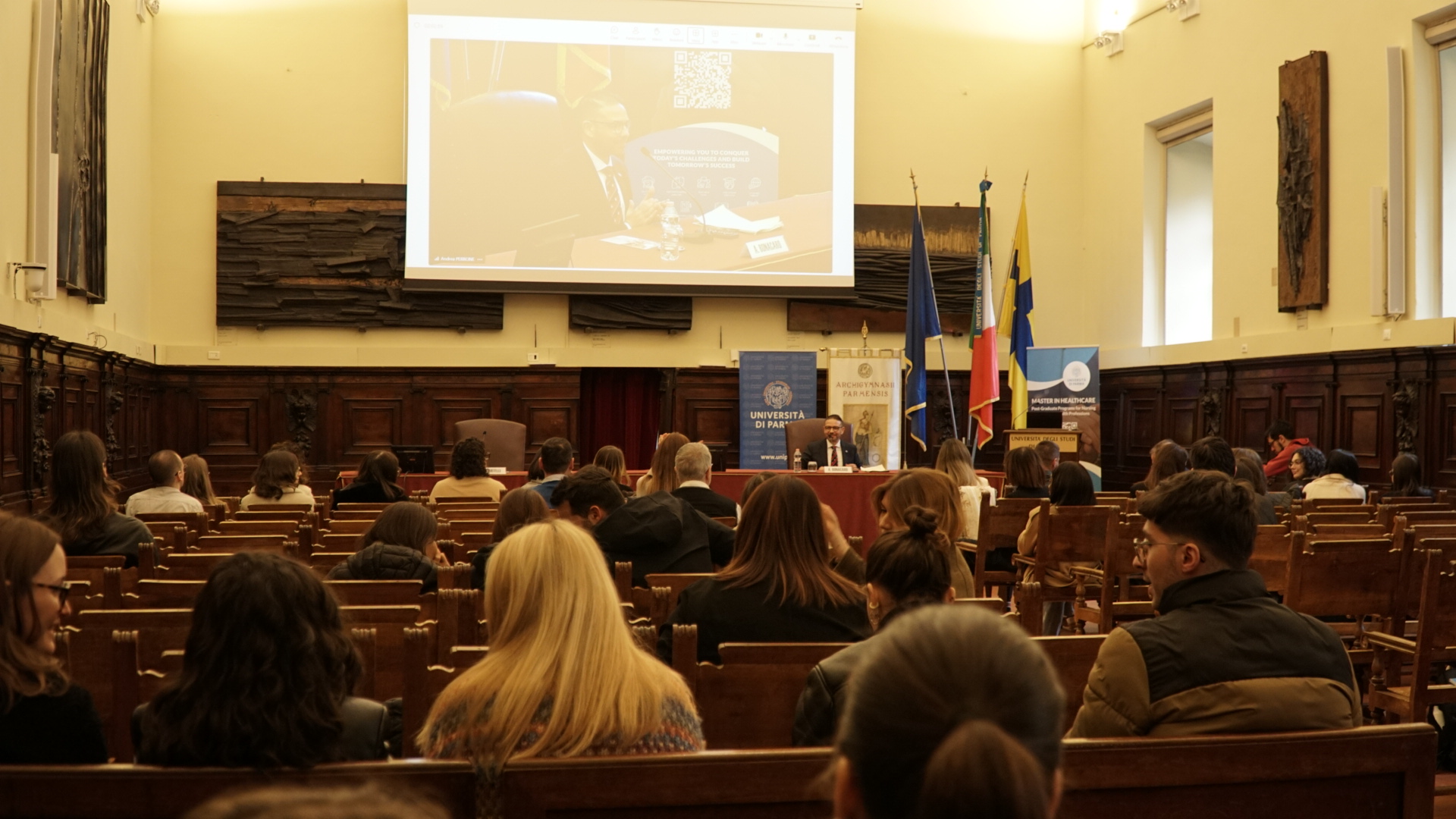
On Monday, March 30, 2026, the Inauguration Ceremony of the 2025/2026 academic year of the Master’s Programs in Healthcare at the University of Parma took place in the Aula Magna, marking the official start of educational activities and welcoming the new student community.

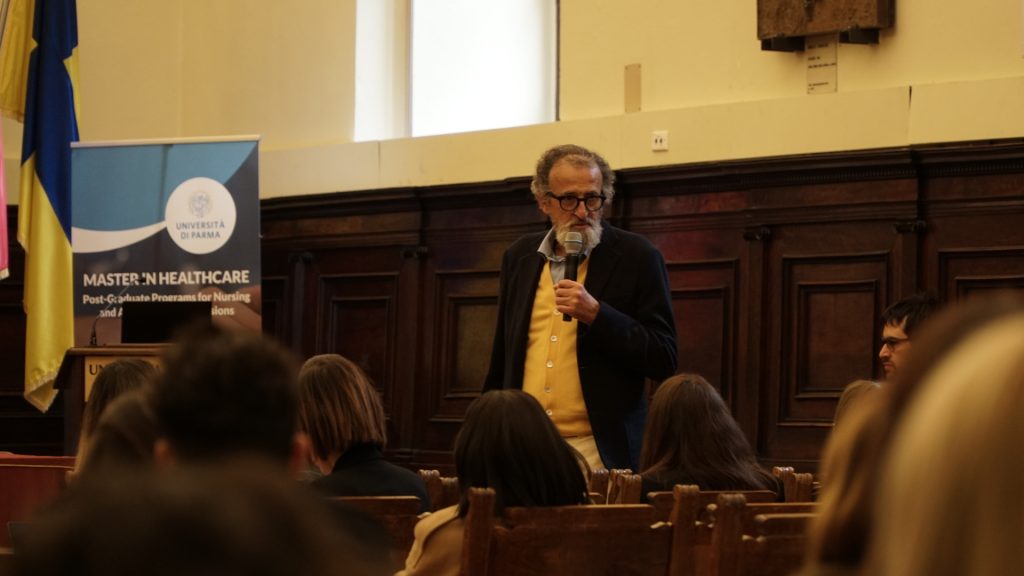
The day opened with institutional greetings from Prof. Antonio Bonacaro, Associate Professor of Nursing Sciences at the University of Parma and President of the Master’s Programs in Healthcare, who highlighted the value of a continuously growing educational project, capable of engaging an increasing number of professionals from different areas of the health and social care system each year. Prof. Bonacaro emphasized how the Master’s programs represent a space for the development of advanced competencies, designed to address the emerging needs of contemporary healthcare through pathways structured across clinical, community, managerial, educational, and innovation areas.

During his speech, he also outlined the key distinguishing features of the Master’s Programs in Healthcare: person-centered care, interprofessional collaboration, quality and safety of care, the development of critical thinking and research skills, along with a strong focus on values such as equity, inclusion, and social responsibility. Particular attention was also given to the role of technologies, artificial intelligence, and new digital tools, underlining the importance of their conscious and critical integration into care processes.

This was followed by the institutional greetings of the Rector, Prof. Paolo Martelli, who extended his best wishes to the students at the beginning of their educational journey and reaffirmed the importance of advanced education for the development of healthcare professions and systems.

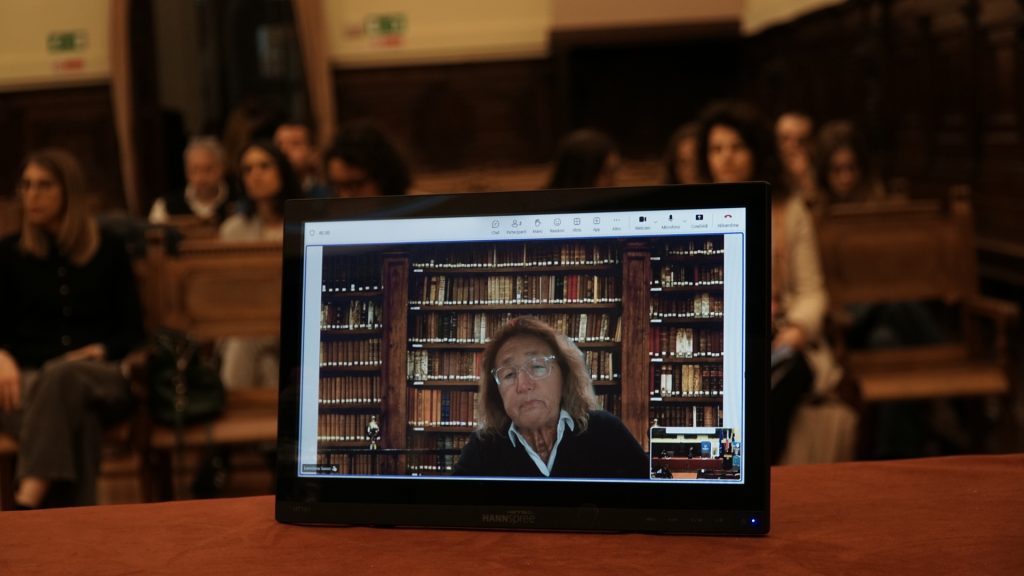
A central moment of the morning was the lectio magistralis delivered by Prof. Loredana Sasso, Full Professor of Nursing Sciences at the University of Genoa, entitled “Community and Advanced Nursing: The Contribution of the Profession to a Modern, Inclusive, and Resilient Healthcare System”.

In her lecture, Prof. Sasso reflected on the transformations currently affecting healthcare systems at a global level, characterized by increasingly complex demographic and social challenges, including population aging and the rise in chronic conditions. In this context, she highlighted the shift from a performance-based model to an approach focused on person-centered care, grounded in continuity of care, service integration, and patient centrality. Referring to key directions of the global health agenda, she emphasized the strategic role of primary care and the need for healthcare systems capable of ensuring accessibility, equity, and responsiveness to complex scenarios.

Within this framework, nursing emerges as a fundamental pillar, ensuring continuity, coordination of care pathways, and the promotion of patient autonomy. Significant attention was also given to the importance of advanced nursing education, considered essential for addressing emerging needs and developing competencies in managing complexity, ensuring continuity of care, and using data to support decision-making processes.

The lecture also addressed the theme of patient involvement, noting that it is still not fully integrated into decision-making and research processes, and highlighted the need to strengthen participatory models based on trust and collaboration. The morning concluded with a message to students, emphasizing education as a key driver to face future challenges and encouraging them to become professionals capable of combining competence, responsibility, and vision.

In the afternoon, the day continued with meetings between tutors and students of each Master’s program, aimed at presenting the educational offer, the organization of teaching activities, and the tools that will support students throughout the academic year.

The inauguration of March 30 thus marks the beginning of a new year of education, exchange, and professional growth, confirming the Master’s Programs in Healthcare at the University of Parma as a reference point for the development of competencies in healthcare professions.

HealthCareMaster
Send on WhatsApp