
fbpx

Tag: Research

FINE EUROPE 2026: PARMA AT THE CENTER OF INTERNATIONAL DIALOGUE ON NURSING EDUCATION

On March 5–6, the University of Parma will host the international conference FINE Europe 2026 – Strengthening Nursing Education for a Safer Tomorrow, one of the most important scientific events dedicated to nursing education at the European and international level.

The event will bring together more than 200 delegates from numerous European countries and other international contexts, providing a space for dialogue among lecturers, researchers, professionals, and students on the key challenges related to the development of nursing education and the evolution of care models. The conference will include a plenary session and five parallel sessions, featuring more than 140 scientific contributions, including oral presentations and posters, along with keynote lectures from internationally recognized professionals.

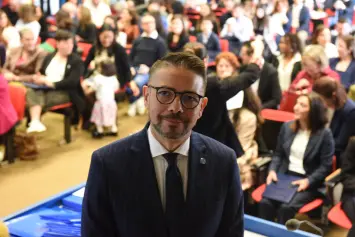
During a radio interview with Radio Duchessa, Antonio Bonacaro, President of the Master’s Programs in Healthcare at the University of Parma and promoter of the initiative, highlighted the scientific and educational value of the conference: “This conference is addressed to a very broad audience: lecturers, researchers, tutors, and professionals, but also the large student community of our University. It will be an important opportunity to reflect on the most relevant issues concerning the evolution of teaching and nursing education”.

The initiative represents an important opportunity for international dialogue, where educational models, academic experiences, and care practices from different contexts can be compared, contributing to the development of new perspectives for the profession. During the interview, Prof. Bonacaro also emphasized how Italy is playing an increasingly significant role in the scientific field of nursing sciences: “In recent years, our country has begun to play a leading role in nursing sciences, thanks to the development of doctoral schools and a growing scientific production, supported by increasingly strong collaborations with universities and research centers abroad”.

Among the topics that will be discussed during the conference is the study of innovative care models, capable of responding more effectively to citizens’ needs and to the transformations of healthcare systems: “We are witnessing growing attention toward innovative care models designed to provide more timely and effective responses to people’s needs, also through the development of advanced nursing competencies”.

The conference therefore represents a significant opportunity not only for the academic and professional communities but also to strengthen the dialogue between research, education, and health and social care services, promoting a vision of the nursing profession increasingly oriented toward innovation, international collaboration, and quality of care.

Link to watch the live broadcast

FINE EUROPE 2026 INTERNATIONAL CONFERENCE AT THE UNIVERSITY OF PARMA

The University of Parma will host the International Conference “FINE Europe 2026 – Strengthening Nursing Education for a Safer Tomorrow” on March 5 and 6, one of the leading biennial scientific events dedicated to nursing education at both European and international levels.

Promoted by the European Federation of Educators in Nursing Science (FINE) in collaboration with the University, the conference represents a platform for dialogue and cooperation among lecturers, researchers, managers, and professionals from universities and academic institutions across Europe and beyond, with more than 140 scientific contributions presented to the academic community. The initiative involves the direct participation of Antonio Bonacaro, President of the Master in Healthcare programmes at the University of Parma, as Organizer and Chair of the Conference Scientific Committee. The sessions will address strategic topics for the future of the nursing profession and advanced education, including governance and leadership in training pathways, curriculum development, quality and innovation in teaching, interprofessional education, and transversal skills, as well as the humanistic and cultural dimensions of teaching.

The opening session, scheduled for Thursday, March 5 at 9:00 a.m., will feature institutional greetings from the Rector of the University of Parma, Paolo Martelli, the Regional Councillor for Health Policies of Emilia-Romagna, Massimo Fabi, Senator Albertina Soliani, and the Mayor of Parma, Michele Guerra. The conference aims to promote advanced scientific dialogue, encouraging the sharing of best practices, innovative models, and strategies for harmonising educational policies in nursing at the European level, with a focus on the global challenges of contemporary healthcare.

PROGRAMME

INNOVATIVE TEACHING AWARD: RECOGNITION FOR ANTONIO BONACARO

The University of Parma celebrated the first edition of the Awards for the Development of Innovative Teaching during a ceremony held in the Aula Magna at the University’s main campus. The initiative, promoted by the University to recognize faculty members’ commitment to experimenting with new and meaningful teaching practices, awarded both individual projects and group proposals that introduced advanced educational methodologies aligned with students’ needs and the challenges of contemporary teaching.

Among the individual award recipients is Antonio Bonacaro, President of the Master in Healthcare programmes at the University of Parma, recognized for his commitment to innovating teaching practices and for integrating active, participatory learning approaches aimed at building professional competencies.

The awarding of this recognition reflects the University’s strong focus on teaching models capable of responding to the needs of advanced educational pathways and enhancing the learning experience for students. Within the Master in Healthcare programmes, educational innovation translates into a training offer that combines theory and practice, the use of educational technologies, Project Work and opportunities for professional dialogue, with the aim of developing high-level competencies. At a time when education for healthcare and social care professions is required to continuously evolve in response to transformations within the socio-healthcare system, the promotion of innovative teaching experiences represents a key factor in improving teaching effectiveness and the quality of acquired skills.

In this context, it is worth noting that applications for the Master in Healthcare programmes at the University of Parma are open until January 30, offering the opportunity to enroll in highly specialized training pathways that combine advanced learning with practical skills for today’s and tomorrow’s healthcare system.

“It is a true honor to have received this recognition, for which I am immensely grateful. This award for innovative teaching is not only a personal acknowledgment, but also a confirmation of the direction we want to give to the Master in Healthcare programmes: high-quality education, the development of skills applicable within healthcare and social services, and a continuous dialogue between academic knowledge and professional experience, fully aligned with the University’s strategic guidelines”. Antonio Bonacaro, President of the Master in Healthcare programmes – University of Parma

THE SHOOTING OF ALEX PRETTI: SHOCK AND SOLIDARITY

The tragic shooting of Alex Pretti, a 37-year-old intensive care nurse in Minneapolis, has caused shock and deep sadness, particularly within the professional nursing community. Pretti, known by family, colleagues and friends as a compassionate healthcare provider dedicated to patient care, was shot and killed by U.S. Border Patrol agents during a federal immigration enforcement operation in Minneapolis on January 24, 2026.

The incident occurred amid widespread protests against federal immigration enforcement actions and has heightened national tensions over the use of force by law enforcement. The shooting of Pretti has led to public outcry and renewed calls for transparency and accountability in how the events unfolded.

As a nursing and health-care community, we are saddened and deeply affected by what happened. The nursing profession is founded on profound ethical values, including the protection of life, safeguarding the most vulnerable, and respect for human dignity. In moments of great sorrow such as this, we extend our solidarity to those affected and reaffirm the importance of conducting objective, transparent and thorough investigations so that the circumstances can be clearly understood.

“As the community of the Master’s programmes in Healthcare at the University of Parma, we express our deepest sympathy to the individuals and families affected by this tragedy. We join in the call for truth and clarity, without any form of political instrumentalisation, in respect of human dignity and the ethical values that guide our profession.”Antonio Bonacaro, President of the Master’s programmes in Healthcare

THE ROLE OF THE CASE MANAGER IN CARE NETWORKS

In today’s social and healthcare services landscape, integration between hospital and community care and the effective management of care pathways represent one of the main challenges in ensuring continuity, quality, and appropriateness of care. In this context, the role of the Case Manager emerges as a key element in coordinating and supporting patients’ clinical and social pathways, promoting a person-centered approach focused on individual needs.

The Case Manager operates across different care settings with the aim of facilitating continuity of care, reducing service fragmentation, and ensuring integrated management of complex needs. This professional figure acts as a link between different levels of care, contributing to the reduction of avoidable hospital admissions, the effective management of chronic conditions, and the promotion of personalized care pathways.

The Case Manager role requires a combination of clinical, organizational, and relational competencies, including:

  • clinical skills to understand and interpret health needs;
  • coordination skills to organize complex interventions;
  • communication skills to encourage active participation of individuals in their own care pathways;
  • the ability to work within multidisciplinary teams, fostering cohesion among professionals from different sectors.

The Master’s Programme in Case / Case Management in Hospital and Community Settings for Healthcare Professionals at the University of Parma responds precisely to the need to train professionals capable of undertaking this role with competence and strategic vision. The educational pathway integrates:

  • up-to-date theoretical knowledge on the dynamics of integrated care;
  • methodological tools for managing complex cases;
  • practical exercises, Project Work, and simulations that make the training immediately applicable in everyday service practice;
  • opportunities for dialogue and exchange with professionals and operational settings.

Participating in the Master’s Programme means acquiring skills that are increasingly required by today’s care models, which are characterized by growing clinical complexity, service fragmentation, and the need for strong coordination between hospital and community care. In a social and healthcare system that is evolving toward increasingly integrated models of care, the Case Manager represents not only a functional response to care needs, but also a bridge between professions, contexts, and services.

THE HEALTHCARE MASTER’S PROGRAMMES: AN OPPORTUNITY TO BUILD THE SKILLS OF THE FUTURE

Applications for the Healthcare Master’s programmes at the University of Parma are open until January 30. These advanced training pathways are designed to address the current and future challenges of the social and healthcare system. In a context marked by organisational transformation, technological innovation, the development of community-based care and the increasing complexity of health needs, investing in advanced education represents a strategic choice for healthcare professionals.

The Healthcare Master’s programmes offer a multidisciplinary approach, combining solid theoretical foundations with project work, practical exercises, case studies and opportunities for discussion and exchange among faculty members, students and professionals. The curricula address key areas such as service management, leadership, research, patient safety, sustainability, organisational innovation and the development of transversal skills required to operate effectively in complex settings.

Taking part in a Healthcare Master’s programme means joining a dynamic learning community, where dialogue between academic knowledge and professional experience supports both individual and collective growth. Participants have the opportunity to develop skills that can be immediately applied in practice, strengthen their analytical and decision-making abilities, and acquire tools to lead change within healthcare and social care organisations.

With applications open until January 30, now is the time to invest in your professional pathway and actively contribute to the evolution of the healthcare system. The Healthcare Master’s programmes at the University of Parma represent a concrete opportunity for those who wish to expand their skills, take on new challenges and become key drivers of innovation in health and social care services.

FAMILY AND COMMUNITY NURSING: ADVANCED EDUCATION AND INTERNATIONAL DIALOGUE

The Master’s Programme in Family and Community Nursing, part of the Master in Healthcare courses at the University of Parma, represents a highly relevant educational pathway for strengthening community-based care and for the evolution of models of care for individuals, families, and communities. In a socio-healthcare context increasingly focused on proximity, service integration, and continuity of care, the role of the family and community nurse plays a strategic part in health promotion, prevention, and the management of complex population needs.

The Master’s Programme is fully embedded in this scenario, offering advanced education that integrates clinical, organizational, relational, and public health competencies. It prepares professionals to operate in community settings, work within multidisciplinary teams, and contribute to the development of innovative and sustainable healthcare services.

Within this framework of openness and dialogue, on February 18, from 9:30 a.m. to 1:00 p.m., a study morning and roundtable discussion dedicated to the role of the family and community nurse will take place. The event is conceived as an inter-university study day, involving the University of Parma together with international partner universities, including the Federal University of Rio Grande do Sul and the University of Rio de Janeiro.

During the morning, academics and experts will share contributions and reflections on community-based care models, the competencies of family and community nurses, and the future development of the profession at both national and international levels. The exchange between different experiences and contexts will provide a valuable opportunity for dialogue and mutual enrichment, in line with the international vocation of the Master in Healthcare programmes.

The study day will also include the participation of professionals from the Local Health Authorities of Piacenza and Parma, who will share contributions and experiences developed within community care settings, offering a concrete perspective on the evolving role of the family and community nurse in healthcare services. The Master’s Programme is also built upon the continuous contribution of faculty members and students, who play a central role in a learning pathway based on the integration of academic knowledge and professional experience, critical reflection, and the shared development of competencies aimed at strengthening community-based care.

This initiative confirms the commitment of the Master in Healthcare programmes to promoting high-quality education that is attentive to changes within the socio-healthcare system and capable of enhancing the role of healthcare professions in building services that are increasingly close to people and communities.

“Investing in the education of family and community nurses means investing in a healthcare model that is closer to people, capable of responding in an integrated and continuous way to the health needs of communities. This Master’s Programme represents a fundamental element in supporting the ongoing transformation of community-based services,” emphasizes Antonio Bonacaro, President of the Master in Healthcare programmes at the University of Parma.

PROGRAMME OF THE STUDY DAY

A YEAR OF TRAINING, DIALOGUE AND GROWTH: SEASON’S GREETINGS FROM THE MASTER PROGRAMS IN HEALTHCARE

As the end-of-year activities come to a close, the Master programs in Healthcare at the University of Parma take a moment to reflect on the journey just completed. It has been an intense and content-rich year, during which students, faculty and professionals engaged in dialogue on key issues shaping the present and future of the health and social care system.

Throughout the year, the educational activities explored essential areas such as organizational innovation, scientific research, service management, continuing education, leadership, sustainability, patient safety and the transversal skills required to operate effectively in complex contexts. Lectures, Project Work, practical exercises and opportunities for discussion contributed to building a solid, multidisciplinary learning experience closely aligned with the realities of healthcare and social services. The Master programs in Healthcare thus confirm themselves as a space for both professional and personal growth, capable of integrating theory and practice and supporting participants in developing skills that are increasingly in demand in today’s health and social care landscape.

On the occasion of the holiday season, the President and the entire Master in Healthcare team would like to extend their warm wishes for happy holidays and a peaceful New Year to students, faculty and professionals, with the hope that the coming year will bring new opportunities for learning, collaboration and innovation. Teaching activities will resume regularly starting from January 7. We look forward to continuing this journey of education and growth together.

PROJECT MANAGEMENT FOR HEALTHCARE

Contemporary healthcare is an ecosystem characterized by constant change: digitalization, reorganization of services, evolving community needs, and technological innovations all demand increasingly advanced management skills. In this context, project management represents a key competence for managers, coordinators, and healthcare professionals involved in designing and implementing complex services, processes, and interventions.

Managing a healthcare project means combining strategic vision, structured methodologies, and organizational skills — always keeping service quality and patient safety at the center. For this reason, knowing and applying project-management tools enables teams to methodically tackle initiatives such as reorganizing a department, introducing new technologies, activating integrated care pathways, or launching training programs.

Among the most used tools and approaches are:

  • Context and stakeholder analysis
  • Definition of objectives
  • Detailed activity planning
  • Digital scheduling tools
  • Risk management
  • Monitoring and evaluation

Within the Healthcare Master’s programmes, these topics are addressed both theoretically and through practical exercises and case studies, providing students with an approach that is concrete and applicable to the real world of social and health services. The goal is to train professionals capable of leading complex projects, working in multidisciplinary teams, and promoting innovation within organizations.

In a sector where every change has direct implications for people and communities, project management proves to be a strategic ally for making transformation possible, effective, and sustainable.

INSIDE THE MASTER: TRAINING NEEDS ANALYSIS AND SKILLS DEVELOPMENT IN HEALTHCARE

In the social and healthcare sector, training is not simply a regulatory requirement or a periodic update: it is a strategic tool that enables organisations to grow, innovate, and ensure high-quality care. Designing effective training pathways requires a structured approach capable of connecting real needs, professional competencies, and organisational goals.

Within the Master’s Programme in “Training Strategies in the Social and Healthcare Sector: European Standards and Innovation”, the analysis of training needs and the development of competencies represents a fundamental pillar of the curriculum. Dedicated modules explore how to accurately identify areas for improvement, evaluate the impact of training, and guide professionals toward the acquisition of technical, relational, and organisational skills that can be effectively applied in practice.

A key component of the programme is the shift from knowledge-based training to a competency-based approach: knowing how to act, how to collaborate, how to communicate. In an increasingly complex healthcare environment, where multidisciplinary teams work under pressure and in constant evolution, soft skills are no longer optional but essential. Teamwork, effective communication, group management, and the ability to navigate difficult situations are all elements that directly contribute to safety, care quality, and organisational wellbeing.

Beyond theoretical frameworks, students engage with practical tools to assess training effectiveness and evaluate its real impact on processes and organisational performance. The goal is to promote a culture of continuous learning that goes beyond content delivery and instead generates value, skills, and professional development.

This perspective, embedded across all Healthcare Master’s Programmes, aims to train professionals capable of designing, leading, and evaluating training within social and healthcare services—turning education into a true driver of change.

HealthCareMaster
Send on WhatsApp