

fbpx

Tag: Healthcare

THE FUTURE OF PALLIATIVE CARE: HUMANIZATION AND INNOVATION

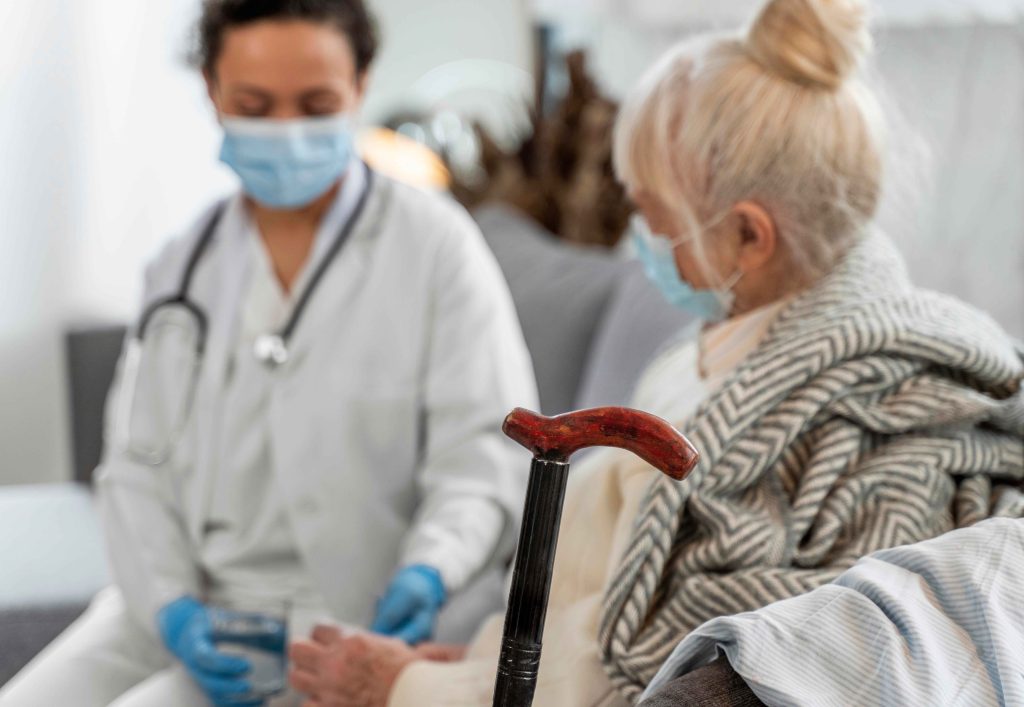
Palliative care is a fundamental pillar of modern healthcare, providing qualified assistance and support during the most delicate moments of a patient’s life. The sector is evolving towards greater integration between technological innovation and a patient-centered approach, with the goal of improving quality of life and addressing the complex needs of patients and their families.

The Healthcare Master’s programs at the University of Parma offer advanced training in this field, preparing healthcare professionals to combine clinical and relational skills for effective and humanized care.

The curriculum covers key topics such as:
Multidisciplinary approach: teamwork among doctors, nurses, psychologists, and other healthcare professionals to ensure comprehensive patient care.
Technological innovation: from the use of telemedicine to pain management through advanced therapies.
Support for patients and families: strategies to ensure personalized care that respects individual values.
Ethical and legal aspects: principles and regulations for responsible healthcare that upholds human dignity.

In a context where the demand for palliative care continues to grow, education plays a key role in preparing professionals to face future challenges with empathy, competence, and innovation.

ETHICS AND DEONTOLOGY IN HEALTHCARE PROFESSIONS: THE ROLE OF EDUCATION

In today’s healthcare landscape, professionals face increasingly complex ethical challenges. From patient privacy management to end-of-life decisions, from ensuring equitable access to care to the use of new technologies in clinical practice, ethical implications are central to fostering responsible healthcare that serves the common good.

The Master’s programs in Healthcare at the University of Parma place ethics and professional deontology at the core of their curriculum, equipping students with both theoretical and practical tools to navigate the ethical dilemmas that arise in daily professional life. The academic path covers key topics such as informed consent, bioethics, professional responsibility, and ethical conflict resolution, promoting a critical and reflective approach that enables future professionals to act with integrity and competence.

A solid education in healthcare ethics is essential for cultivating a culture of responsibility, transparency, and respect for individuals. Through case studies, simulations, and discussions with industry experts, students gain not only knowledge but also the sensitivity needed to handle complex situations with balance and professionalism.

Investing in ethical education means contributing to a fairer, more inclusive healthcare system that is truly responsive to patients’ needs. With this goal in mind, the Master’s programs in Healthcare at the University of Parma aim to train professionals who are fully aware of their role and the moral implications of their choices, ensuring they operate in accordance with the highest ethical and deontological standards.

BOOK PRESENTATION BY MARISA CANTARELLI: “MODELO DA ATENÇÃO EM ENFERMAGEM”

The Healthcare Master’s Programs at the University of Parma are pleased to announce an event of great significance for the nursing and academic community: the presentation of the book “The Nursing Performance Model of Marisa Cantarelli in Brazil: Reflections and Implications” by Professor Marisa Cantarelli, the first theorist of Italian nursing care.

Date: February 20, 2025
Time: 10:00 AM
Location: Aula Magna, University of Parma, Via Università 12, Parma
Live streaming on the University’s YouTube channel

The event, promoted and moderated by Professor Antonio Bonacaro, Associate Professor of Nursing Sciences at the University of Parma, will be a unique opportunity to explore Marisa Cantarelli’s contributions to the nursing profession and to examine the implications of her theoretical model in Brazil. Her work has revolutionized the concept of nursing care, laying the foundation for a structured, scientific, and patient-centered professional practice.

The discussion will bring together leading Italian and Brazilian academics and healthcare professionals to analyze the applicability and evolution of the Cantarelli Model in an international context. Among the speakers, public health experts, university professors, and representatives of nursing institutions will provide insight into the theoretical and practical value of Cantarelli’s approach in the nursing field.

This event represents a valuable opportunity to deepen the understanding of a model that has transformed nursing care and continues to inspire professionals worldwide. Participation is open to students, healthcare professionals, and anyone interested in learning about the evolution of the nursing profession.

Don’t miss this event! Join us in person or follow the live stream.

Live streaming link

Program

TERRITORIAL HEALTHCARE: THE CHALLENGE OF INTEGRATION

The evolution of the social and healthcare system increasingly places territorial healthcare at its core a model in which hospitals, local services, and healthcare professionals collaborate synergistically to ensure effective and personalized patient care. The growing complexity of health needs, the aging population, and the necessity to optimize resources make an integrated approach across different levels of care essential.

The Healthcare Master’s programs at the University of Parma address this topic in depth, training professionals capable of operating in a healthcare system increasingly oriented toward integrated patient management. The goal is to provide advanced skills to coordinate care pathways that do not end upon hospital discharge but continue in an effective and sustainable continuum of care.

A truly efficient healthcare system cannot rely solely on hospital structures but must include a solid and well-organized territorial network. Key aspects for improving care continuity include:

  • Interprofessionalism and collaboration: Continuous dialogue between doctors, nurses, and healthcare professionals to ensure coordinated care;
  • Digital healthcare and telemedicine: Innovative tools for real-time monitoring and sharing of clinical information among various healthcare system actors;
  • Chronic disease management and home care: The importance of personalized care pathways for fragile patients or those with chronic conditions, reducing the risk of avoidable hospitalizations;
  • Patient and family involvement: A care model that places the patient at the center, making them an active participant in their own care journey.

The ability to effectively integrate the different components of healthcare assistance represents one of the main challenges of the future. Through an innovative and multidisciplinary educational offering, the Healthcare Master’s programs at the University of Parma prepare professionals to tackle and manage this transformation, contributing to a more efficient, accessible, and citizen-centered healthcare system.

PROMOTING HEALTHY LIFESTYLES: A COMMITMENT FROM THE MASTER’S PROGRAMS IN HEALTHCARE 

The Master’s programs in Healthcare at the Department of Medicine and Surgery of the University of Parma reaffirm their commitment to promoting healthy lifestyles, a cornerstone in addressing the challenges of modern healthcare. 

The training provided by our courses goes beyond developing technical and managerial skills, placing significant emphasis on prevention and health promotion. People’s well-being is at the heart of every sustainable healthcare system, and this principle is deeply embedded in the educational mission of our Master’s programs. 

Why promote healthy lifestyles? 

Prevention is one of the most effective tools to reduce the prevalence of chronic diseases and improve the quality of life. 

Our Master’s programs focus on the importance of an integrated approach that not only involves disease treatment but also educates patients and the community on the significance of making healthy lifestyle choices. 

Within the educational pathways, students have the opportunity to explore topics such as: 

The commitment to improving collective health is a challenge that requires updated skills and a strong focus on innovation. Through the Master’s programs in Healthcare, the University of Parma contributes to the training of professionals who are aware of their crucial role in building a more effective, equitable, and wellness-oriented healthcare system.

HealthCareMaster
Send on WhatsApp