
fbpx

Tag: Innovation

THE HEALTHCARE MASTER’S PROGRAMMES: AN OPPORTUNITY TO BUILD THE SKILLS OF THE FUTURE

Applications for the Healthcare Master’s programmes at the University of Parma are open until January 30. These advanced training pathways are designed to address the current and future challenges of the social and healthcare system. In a context marked by organisational transformation, technological innovation, the development of community-based care and the increasing complexity of health needs, investing in advanced education represents a strategic choice for healthcare professionals.

The Healthcare Master’s programmes offer a multidisciplinary approach, combining solid theoretical foundations with project work, practical exercises, case studies and opportunities for discussion and exchange among faculty members, students and professionals. The curricula address key areas such as service management, leadership, research, patient safety, sustainability, organisational innovation and the development of transversal skills required to operate effectively in complex settings.

Taking part in a Healthcare Master’s programme means joining a dynamic learning community, where dialogue between academic knowledge and professional experience supports both individual and collective growth. Participants have the opportunity to develop skills that can be immediately applied in practice, strengthen their analytical and decision-making abilities, and acquire tools to lead change within healthcare and social care organisations.

With applications open until January 30, now is the time to invest in your professional pathway and actively contribute to the evolution of the healthcare system. The Healthcare Master’s programmes at the University of Parma represent a concrete opportunity for those who wish to expand their skills, take on new challenges and become key drivers of innovation in health and social care services.

FAMILY AND COMMUNITY NURSING: ADVANCED EDUCATION AND INTERNATIONAL DIALOGUE

The Master’s Programme in Family and Community Nursing, part of the Master in Healthcare courses at the University of Parma, represents a highly relevant educational pathway for strengthening community-based care and for the evolution of models of care for individuals, families, and communities. In a socio-healthcare context increasingly focused on proximity, service integration, and continuity of care, the role of the family and community nurse plays a strategic part in health promotion, prevention, and the management of complex population needs.

The Master’s Programme is fully embedded in this scenario, offering advanced education that integrates clinical, organizational, relational, and public health competencies. It prepares professionals to operate in community settings, work within multidisciplinary teams, and contribute to the development of innovative and sustainable healthcare services.

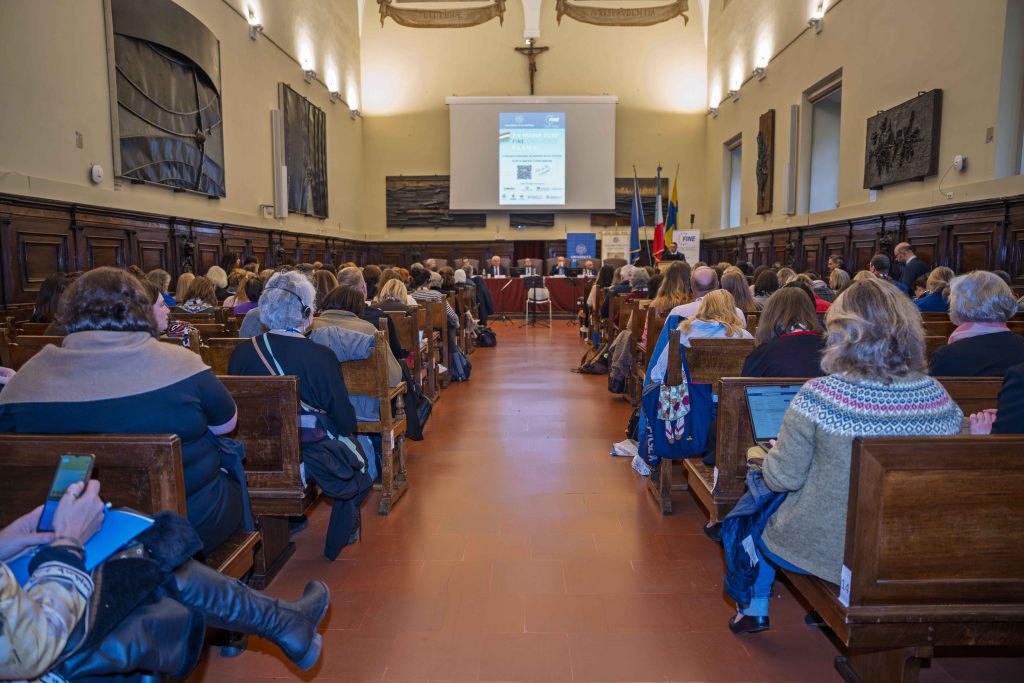
Within this framework of openness and dialogue, on February 18, from 9:30 a.m. to 1:00 p.m., a study morning and roundtable discussion dedicated to the role of the family and community nurse will take place. The event is conceived as an inter-university study day, involving the University of Parma together with international partner universities, including the Federal University of Rio Grande do Sul and the University of Rio de Janeiro.

During the morning, academics and experts will share contributions and reflections on community-based care models, the competencies of family and community nurses, and the future development of the profession at both national and international levels. The exchange between different experiences and contexts will provide a valuable opportunity for dialogue and mutual enrichment, in line with the international vocation of the Master in Healthcare programmes.

The study day will also include the participation of professionals from the Local Health Authorities of Piacenza and Parma, who will share contributions and experiences developed within community care settings, offering a concrete perspective on the evolving role of the family and community nurse in healthcare services. The Master’s Programme is also built upon the continuous contribution of faculty members and students, who play a central role in a learning pathway based on the integration of academic knowledge and professional experience, critical reflection, and the shared development of competencies aimed at strengthening community-based care.

This initiative confirms the commitment of the Master in Healthcare programmes to promoting high-quality education that is attentive to changes within the socio-healthcare system and capable of enhancing the role of healthcare professions in building services that are increasingly close to people and communities.

“Investing in the education of family and community nurses means investing in a healthcare model that is closer to people, capable of responding in an integrated and continuous way to the health needs of communities. This Master’s Programme represents a fundamental element in supporting the ongoing transformation of community-based services,” emphasizes Antonio Bonacaro, President of the Master in Healthcare programmes at the University of Parma.

PROGRAMME OF THE STUDY DAY

A YEAR OF TRAINING, DIALOGUE AND GROWTH: SEASON’S GREETINGS FROM THE MASTER PROGRAMS IN HEALTHCARE

As the end-of-year activities come to a close, the Master programs in Healthcare at the University of Parma take a moment to reflect on the journey just completed. It has been an intense and content-rich year, during which students, faculty and professionals engaged in dialogue on key issues shaping the present and future of the health and social care system.

Throughout the year, the educational activities explored essential areas such as organizational innovation, scientific research, service management, continuing education, leadership, sustainability, patient safety and the transversal skills required to operate effectively in complex contexts. Lectures, Project Work, practical exercises and opportunities for discussion contributed to building a solid, multidisciplinary learning experience closely aligned with the realities of healthcare and social services. The Master programs in Healthcare thus confirm themselves as a space for both professional and personal growth, capable of integrating theory and practice and supporting participants in developing skills that are increasingly in demand in today’s health and social care landscape.

On the occasion of the holiday season, the President and the entire Master in Healthcare team would like to extend their warm wishes for happy holidays and a peaceful New Year to students, faculty and professionals, with the hope that the coming year will bring new opportunities for learning, collaboration and innovation. Teaching activities will resume regularly starting from January 7. We look forward to continuing this journey of education and growth together.

GREEN LEADERSHIP IN HEALTHCARE

Environmental sustainability is today one of the major challenges facing the health and social care system. Complex organizational structures, high resource consumption, waste production and highly intensive processes make healthcare a strategic sector for promoting more responsible development models. In this context, green leadership plays a central role: leading sustainable change means being able to combine quality of care, safety, efficiency and attention to environmental impact.

Being a “green” leader in healthcare does not simply mean introducing technological solutions or adopting eco-friendly practices, but above all fostering an organizational culture oriented toward sustainability. Executives, coordinators and professionals with managerial responsibilities are called upon to integrate environmental considerations into decision-making processes, service planning, resource management and team engagement. Sustainability thus becomes a shared value, guiding everyday behaviors as well as medium- and long-term strategies.

Green leadership is also expressed through the ability to understand the complexity of the health and social care context and to activate gradual and realistic changes: reducing waste, using resources responsibly, ensuring proper management of healthcare waste, digitalizing processes and redesigning care pathways with a focus on efficiency and sustainability. All these areas require managerial skills, coordination capabilities and a systemic vision of how healthcare organizations function.

Within the Master in Healthcare, sustainability and green leadership are addressed in a cross-cutting manner, as an integral part of the skills needed to lead the services of the future. Training leaders capable of integrating sustainability, innovation and quality of care means investing in a more resilient healthcare system, attentive to people, communities and the environment.

PROJECT MANAGEMENT FOR HEALTHCARE

Contemporary healthcare is an ecosystem characterized by constant change: digitalization, reorganization of services, evolving community needs, and technological innovations all demand increasingly advanced management skills. In this context, project management represents a key competence for managers, coordinators, and healthcare professionals involved in designing and implementing complex services, processes, and interventions.

Managing a healthcare project means combining strategic vision, structured methodologies, and organizational skills — always keeping service quality and patient safety at the center. For this reason, knowing and applying project-management tools enables teams to methodically tackle initiatives such as reorganizing a department, introducing new technologies, activating integrated care pathways, or launching training programs.

Among the most used tools and approaches are:

  • Context and stakeholder analysis
  • Definition of objectives
  • Detailed activity planning
  • Digital scheduling tools
  • Risk management
  • Monitoring and evaluation

Within the Healthcare Master’s programmes, these topics are addressed both theoretically and through practical exercises and case studies, providing students with an approach that is concrete and applicable to the real world of social and health services. The goal is to train professionals capable of leading complex projects, working in multidisciplinary teams, and promoting innovation within organizations.

In a sector where every change has direct implications for people and communities, project management proves to be a strategic ally for making transformation possible, effective, and sustainable.

INSIDE THE MASTER: TRAINING NEEDS ANALYSIS AND SKILLS DEVELOPMENT IN HEALTHCARE

In the social and healthcare sector, training is not simply a regulatory requirement or a periodic update: it is a strategic tool that enables organisations to grow, innovate, and ensure high-quality care. Designing effective training pathways requires a structured approach capable of connecting real needs, professional competencies, and organisational goals.

Within the Master’s Programme in “Training Strategies in the Social and Healthcare Sector: European Standards and Innovation”, the analysis of training needs and the development of competencies represents a fundamental pillar of the curriculum. Dedicated modules explore how to accurately identify areas for improvement, evaluate the impact of training, and guide professionals toward the acquisition of technical, relational, and organisational skills that can be effectively applied in practice.

A key component of the programme is the shift from knowledge-based training to a competency-based approach: knowing how to act, how to collaborate, how to communicate. In an increasingly complex healthcare environment, where multidisciplinary teams work under pressure and in constant evolution, soft skills are no longer optional but essential. Teamwork, effective communication, group management, and the ability to navigate difficult situations are all elements that directly contribute to safety, care quality, and organisational wellbeing.

Beyond theoretical frameworks, students engage with practical tools to assess training effectiveness and evaluate its real impact on processes and organisational performance. The goal is to promote a culture of continuous learning that goes beyond content delivery and instead generates value, skills, and professional development.

This perspective, embedded across all Healthcare Master’s Programmes, aims to train professionals capable of designing, leading, and evaluating training within social and healthcare services—turning education into a true driver of change.

PRIVACY AND DATA PROTECTION IN THE SOCIO-HEALTHCARE SECTOR

Safeguarding privacy in the socio-healthcare sector is today one of the most delicate and complex challenges for professionals involved in service management, patient care, and continuity of assistance between hospital and community settings. The growing digitalization of processes has brought new opportunities, but also new responsibilities.

In this context, data protection means above all ensuring dignity, trust, and safety for the people receiving care. Health data is among the most sensitive categories of information and requires advanced competencies in governance, access protocols, security measures, and risk assessment. This approach concerns all professionals: managers, coordinators, healthcare workers, social workers, and anyone who handles information related to a person’s health and well-being. Privacy protection thus becomes a cultural element before a technical one.

A crucial—often underestimated—aspect concerns communication. Privacy in the socio-healthcare sector is not only about technology and regulations: it also involves managing relationships, handling information shared within multidisciplinary teams, and understanding the boundary between what must be communicated to ensure care continuity and what must instead remain protected. The most important competency becomes, therefore, professional awareness: the ability to recognize risks, apply correct procedures, and understand the impact of one’s decisions on the lives of those receiving care.

The topic of data protection is addressed across all Healthcare Master’s Programs at the University of Parma. Through lectures, case studies, and practical exercises, students develop the skills needed to effectively manage privacy, data security, and information governance within healthcare and socio-healthcare services.

INSIDE THE MASTER’S PROGRAMME: NEGOTIATION AND CONFLICT MANAGEMENT

In the field of health and social care services—and particularly in contexts dedicated to the prevention and control of healthcare-associated infections—the ability to manage complex relationships is just as important as technical and scientific expertise. For this reason, within the Second-Level Master’s Programme in Management/Coordination of Services for Infection Risk Related to Healthcare, a dedicated lesson focused on a crucial topic: negotiation as a tool to face and transform conflict.

The session began with an analysis of identity dynamics within professional groups: the sense of belonging, the emotional significance attributed to one’s role, and the way individuals define themselves as part of a group all profoundly affect attitudes, communication, and behaviours in healthcare organisations. When different identities come into contact—or into conflict—various individual and collective strategies can emerge: from psychological or physical withdrawal, to disidentification from the group, and even attempts to redefine or transform one’s professional identity.

The lesson highlighted how conflict, far from being something to avoid, can represent a powerful driver of growth and innovation. Minority groups, through the coherence of their positions and their capacity for constructive dialogue, can influence majorities and contribute to meaningful organisational change.
Participants were encouraged to view conflict not as an insurmountable divide but as a space where interests, values, and emotions can be explored in a constructive way.

Through examples, exercises, and real case studies, the role of negotiation was examined as a communicative process aimed at finding shared solutions. Observing, listening, and understanding the needs and interests—both one’s own and those of others—are essential steps in transforming confrontation into collaboration. In infection-risk management, where diverse professionals work under pressure and with significant responsibilities, this competence becomes fundamental to coordinating teams, aligning objectives, and supporting effective decision-making.

This lesson forms part of the broader curriculum of the Master’s Programme, which dedicates substantial attention to organisational and relational dynamics. The programme recognises that the quality of health and social care services relies not only on technical skills, but also on the ability to cooperate, negotiate, and lead change.

SCIENTIFIC RESEARCH IN THE HEALTHCARE MASTER’S PROGRAMMES

In today’s context, the challenges faced by the health and social care system make scientific research more essential than ever. Providing care is not enough: analytical and methodological skills are needed to generate evidence, evaluate practices, improve processes, and ensure the quality and effectiveness of healthcare services. In this sense, research is the driving force that fuels innovation and enables health and social care professions to evolve continuously, adapting to emerging needs and high quality standards.

The Healthcare Master’s Programmes of the University of Parma respond to this need by requiring not only theoretical study but also a strong practical commitment to research. Thanks to this approach, participants develop not only technical skills but also critical and reflective thinking—fundamental for interpreting data, considering ethical variables, integrating into multidisciplinary teams and applying results in clinical and organizational practice.

In a rapidly evolving health and social care landscape, research is the common thread that links education, clinical practice and innovation. For this reason, every Healthcare Master’s Programme includes dedicated teaching on research, as well as practical exercises and Project Work. Only in this way is it possible to train professionals capable not only of delivering care, but also of actively contributing to the advancement of knowledge in the health and social care field, promoting real and sustainable improvements.

EMPOWERMENT AND ACTIVE CITIZEN PARTECIPATION

In today’s social and healthcare landscape, talking about “empowerment” does not simply mean involving citizens in decisions that concern them. It means rethinking how services, care pathways, and interventions are designed, evaluated, and improved. This represents a paradigm shift, moving citizens—together with caregivers, families, and communities—from the role of mere recipients to that of co-protagonists in care processes.

Co-design is based on the idea that real needs can fully emerge only when those who experience the service actively participate in its definition. This means including users and caregivers in structured listening sessions, workshops, focus groups, and design thinking activities. The logic is reversed: people are no longer asked to adapt to existing services; services are built starting from their everyday experiences.

For active participation to be possible, individuals must have the ability to understand information, evaluate it, and use it to make informed health decisions. Health literacy thus becomes a decisive element for empowerment. Promoting it means providing clearer information, more accessible materials, more understandable communication, and truly inclusive digital tools. It also means training professionals to communicate more effectively, using diverse approaches that match the skills and habits of the people they serve.

Apps, patient portals, telemonitoring tools, and messaging systems can encourage more immediate and continuous engagement. However, they are truly effective only when designed together with users. Technology should not replace the relationship; it should make it closer, more accessible, and more usable. The result is not just a “better service” but an entire culture of care that is more participatory and able to respond to the complexities of communities and the diversity of needs.

The Master’s Programmes in Healthcare at the University of Parma move precisely in this direction: training professionals capable of facilitating these processes, building meaningful relationships, and guiding innovation with a genuinely citizen-centered perspective.

HealthCareMaster
Send on WhatsApp
Days
Hours
Minutes
Seconds
ONLINE

Webinar Master in Healthcare

Presentazione offerta formativa Università di Parma

Mercoledì 28 Gennaio dalle 18:00 alle 19:00